Bracebridge Sewage Pumping Station: Worksop's Abandoned Industrial Monument
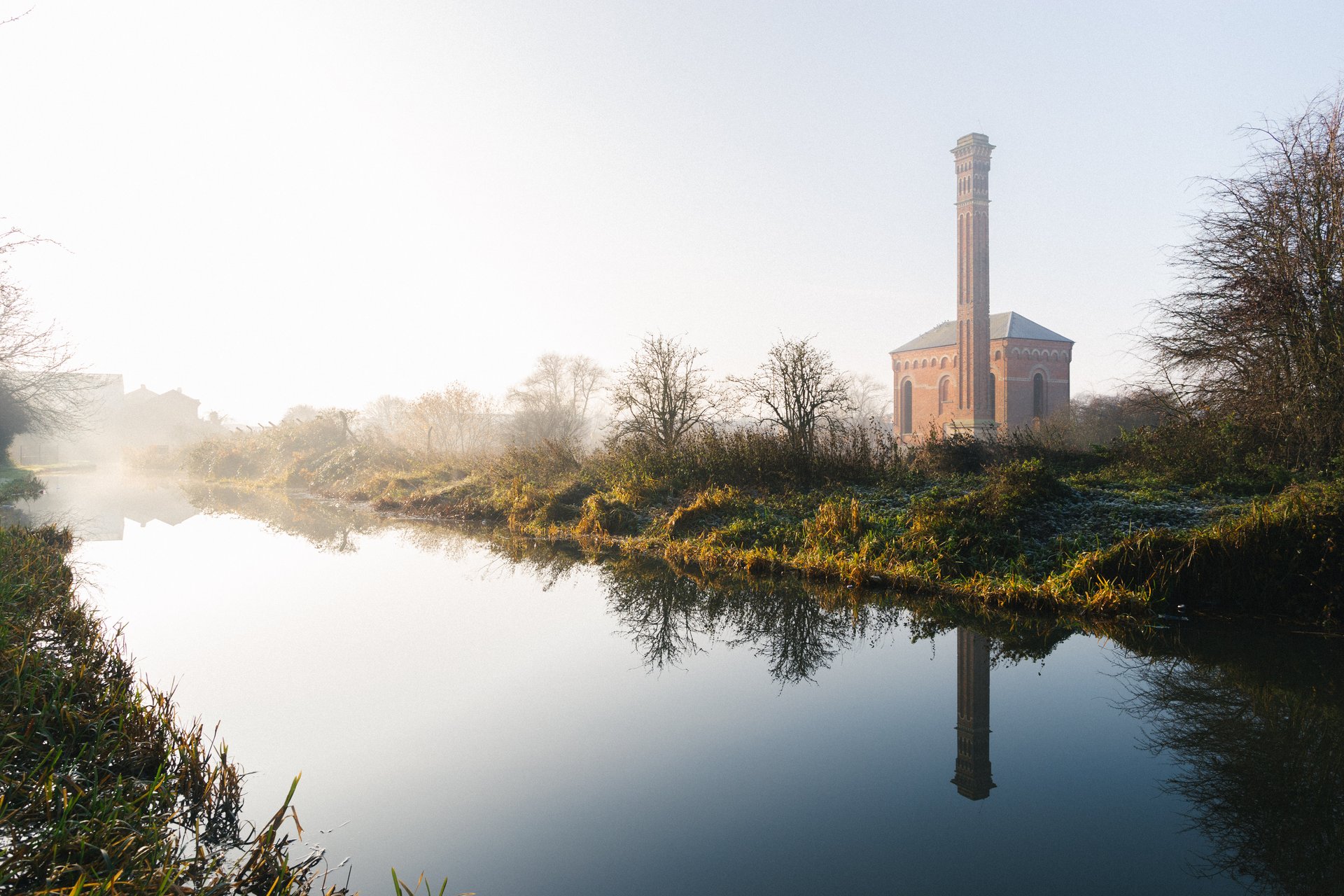
Standing silent and empty behind security fencing on High Hoe Road, the Bracebridge Sewage Pumping Station represents a fascinating piece of Worksop's industrial and public health heritage. This Victorian engineering marvel, now awaiting an uncertain future, once played a vital role in transforming the town's sanitation and saving countless lives. The story of Bracebridge is one of innovation, necessity, and the dramatic improvements in public health that came with Victorian civil engineering.
A Response to Epidemic
The construction of Bracebridge Sewage Pumping Station in 1881 came as a direct response to one of the 19th century's most feared diseases. Cholera, a waterborne illness that had swept through British towns and cities in devastating waves throughout the Victorian era, had struck Worksop with tragic consequences. The epidemic exposed the inadequacy of the town's existing sanitation arrangements, where waste disposal remained primitive and dangerous.
Victorian Britain witnessed several major cholera outbreaks, with the disease claiming tens of thousands of lives across the country. The breakthrough understanding that cholera spread through contaminated water rather than "bad air" had only recently been established through the pioneering work of Dr John Snow in London. This knowledge prompted towns and cities across Britain to invest heavily in proper sewage systems, recognising that public health depended upon separating clean water supplies from human waste.
Worksop's town authorities, galvanised by the local cholera outbreak, committed to building a modern sewage pumping station that would protect residents from future epidemics. The site chosen on High Hoe Road provided practical advantages for the engineering requirements of the time, with access to the Chesterfield Canal for coal delivery and appropriate elevation for the pumping operations.
Victorian Engineering Excellence
The pumping station, completed in 1881, represented state-of-the-art Victorian sanitary engineering. At its heart stood a pair of coal-fired beam engines, massive pieces of machinery that epitomised the industrial might of the age. These beam engines, with their characteristic rocking motion, could pump an impressive 400,000 gallons of sewage every 12 hours, providing adequate capacity for Worksop's population at the time.
Beam engines represented proven technology by the 1880s, having evolved from designs pioneered by engineers like James Watt and Thomas Newcomen in the previous century. The engines at Bracebridge would have featured large vertical cylinders with beams pivoting overhead, connecting to pumps that moved sewage through the system. The sight and sound of these engines in operation must have been impressive, with the rhythmic motion of the beams, the hiss of steam, and the mechanical symphony of Victorian engineering filling the pump house.
The coal required to fire the boilers arrived by barge along the Chesterfield Canal, which ran through Worksop. This waterborne delivery method demonstrated the integrated nature of Victorian infrastructure, with canals serving multiple functions beyond simple cargo transport. Barges would have moored adjacent to the pumping station, with coal unloaded directly into storage areas near the boiler house. This arrangement provided reliable fuel supply whilst avoiding the need for road transport, which would have been far less efficient in the 1880s.
The pumping station complex comprised several distinct buildings and structures. The pump house itself contained the beam engines and associated machinery, built with solid Victorian construction designed to last for generations. The boiler house, a separate structure, contained the coal-fired boilers that generated the steam to power the engines. A substantial chimney, still standing today, carried away the smoke from the boilers, its height ensuring adequate draw for the fires and dispersing smoke above the immediate area.
Treatment tanks, part of the sewage processing system, completed the facility. These tanks allowed for settling and basic treatment of sewage before it entered the wider environment, representing the Victorian understanding of waste treatment, which, whilst basic by modern standards, marked a huge improvement over previous practices.
The Steam Age in Operation
During its steam-powered era, the Bracebridge Pumping Station would have required round-the-clock staffing. Qualified engine men, skilled workers who understood the complexities of steam power, would have operated the beam engines, maintaining the correct pressures, temperatures, and operational speeds. Stokers fed coal into the boilers, hard physical labour that kept the fires burning and steam generating.
The regime would have been demanding, with shifts ensuring 24-hour operation. The skill required to operate such machinery should not be underestimated – Victorian engine men served apprenticeships and took pride in their ability to keep complex equipment running smoothly. The lives of these workers revolved around the rhythms of the engines, with their days structured around firing schedules, maintenance routines, and the constant vigilance required to prevent breakdowns.
The pumping station served as a monument to Victorian municipal pride as well as practical infrastructure. Many such installations featured architectural flourishes that elevated them beyond purely functional structures. Whilst Bracebridge may not have matched the decorative grandeur of some urban pumping stations, it nonetheless represented civic investment in public health and the town's commitment to modern sanitation.
Modernisation and Electrification
The interwar period or post-Second World War years brought significant changes to Bracebridge Pumping Station. The coal-fired beam engines, faithful servants for over half a century, were replaced with electric pumps. This modernisation reflected broader trends across British infrastructure as electricity replaced steam power in countless applications.
Electric pumps offered numerous advantages over steam engines. They required fewer staff, eliminated the need for coal deliveries and storage, operated more quietly, and provided easier control of pumping rates. The conversion process would have involved significant modifications to the pump house, installing electric motors and modern pumps whilst removing the Victorian beam engines. One wonders what became of those magnificent engines – were they scrapped for their metal content, or did they find new homes in museums or preservation sites?
The electrified pumping station continued serving Worksop for several more decades, its basic purpose unchanged despite the transformation in technology. The building that had echoed with the sound of steam and machinery now hummed with electric motors, performing the same vital function with twentieth-century efficiency.
Closure and Abandonment
The construction of a new sewage treatment works at Kilton eventually rendered Bracebridge Pumping Station obsolete. Modern sewage treatment technology, stricter environmental regulations, and Worksop's growing population necessitated larger, more sophisticated facilities than the old Victorian station could provide. When the new works at Kilton came online, Bracebridge closed, its century of service ending.
The transition from active infrastructure to abandoned building happened gradually. The boiler house, no longer needed after electrification, was demolished sometime after 1970, as evidenced by comparing historical Ordnance Survey maps from different periods. This demolition removed a significant portion of the original complex, though fortunately the distinctive chimney survived.
By the early 21st century, the remaining buildings clearly needed attention. In 2003, a new roof was installed on the pump house, suggesting recognition of the building's value and perhaps anticipation of future use. This investment in basic preservation prevented weather damage to the structure's interior, protecting what remained of the Victorian architecture.
Planning Permission and Unrealised Conversion
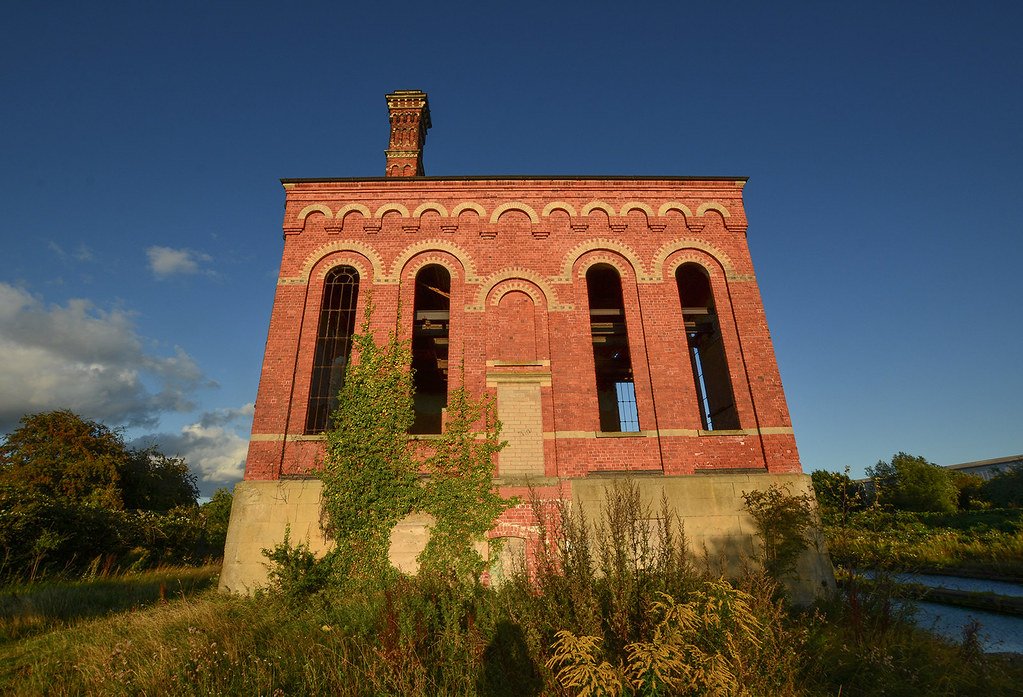
In February 2006, planning permission was granted for an ambitious conversion scheme that would have transformed the Bracebridge Pumping Station into 24 residential apartments. Such conversions of industrial buildings into residential use have become increasingly popular across Britain, with former mills, warehouses, and other industrial structures finding new life as characterful homes.
The proposal for Bracebridge represented an opportunity to preserve the building through adaptive reuse whilst providing distinctive accommodation. Industrial conversions often appeal to buyers seeking properties with character, high ceilings, and interesting architectural features that modern buildings cannot replicate. The pump house's solid Victorian construction, large internal spaces, and historical significance could have translated into attractive apartments.
However, nearly two decades after planning permission was granted, nothing has materialised. The reasons for this failure to proceed remain unclear, though various factors commonly derail such conversion schemes. Funding difficulties, unforeseen structural issues, changes in market conditions, or complications with ownership and legal matters can all stall development projects. Historic building conversions often prove more complex and expensive than initially anticipated, with hidden problems emerging once work begins.
The result is that Bracebridge Pumping Station remains frozen in a state of limbo – too valuable to demolish, too challenging to convert, and too vulnerable to leave completely open to the elements and trespassers.
What Remains Today
The current state of the Bracebridge Pumping Station reflects its decades of abandonment. Security fencing now separates the site from High Hoe Road, preventing public access for safety and security reasons. Behind this barrier stand the remnants of Worksop's Victorian sanitary revolution.
The pump house, the largest surviving structure, stands empty. The 2003 roof protects the interior from the worst effects of weather, but without heating, maintenance, or occupation, deterioration inevitably continues. The windows, if any remain intact, may be boarded or broken. The internal spaces that once housed beam engines and later electric pumps now stand silent, perhaps littered with debris and showing signs of water ingress and decay.
The boiler house chimney, a vertical accent visible from surrounding areas, marks the site and serves as a reminder of the steam age. Built from brick with typical Victorian solidity, the chimney represents the most obviously "industrial" element of what remains. Such chimneys often become local landmarks, their height making them reference points in the landscape even decades after their original function has ceased.
A couple of treatment tanks, presumably concrete structures, survive from the original sewage processing system. These utilitarian elements, less architecturally interesting than the buildings, nonetheless form part of the complete story of how the facility functioned.
The fencing that now surrounds the site creates a barrier between present and past, keeping local residents and curious visitors away from potentially dangerous structures. Abandoned buildings attract attention from urban explorers, photographers, and sometimes vandals, making security measures necessary to prevent accidents and further damage.
Historical Significance
Bracebridge Sewage Pumping Station deserves recognition as an important monument to Victorian public health improvements. The cholera epidemics that prompted its construction killed thousands across Britain, prompting the massive investment in sanitation infrastructure that transformed living conditions in British towns and cities.
The impact of proper sewage systems on public health cannot be overstated. Before facilities like Bracebridge, waterborne diseases including cholera, typhoid, and dysentery regularly swept through towns, killing adults and children indiscriminately. The separation of sewage from drinking water sources, achieved through pumping stations and proper drainage systems, represents one of the most significant public health achievements in history.
Worksop's pumping station forms part of a national story about Victorian engineering and civic responsibility. Across Britain, similar facilities were constructed, many featuring impressive architecture that reflected civic pride. Some have been preserved as museums or converted to new uses, maintaining their connection to local heritage whilst serving contemporary needs.
The beam engines that once powered Bracebridge represent a fascinating chapter in engineering history. These machines, descendants of the engines that powered the Industrial Revolution, combined power with mechanical elegance. Many preserved beam engines now delight visitors at museums across Britain, where they're maintained in working order and demonstrated to new generations.
The Uncertain Future
The question of what happens next to Bracebridge Pumping Station remains unanswered. The 2006 planning permission, if not yet expired, may eventually be implemented if circumstances change. Alternative uses might emerge, though the building's specific design and location present challenges for conversion.
Preservation groups and heritage organisations increasingly recognise the value of industrial buildings as part of our national story. The Victorian Society, Industrial Heritage organisations, and local preservation groups work to protect threatened buildings and advocate for sensitive reuse. Whether Bracebridge has attracted such advocacy remains uncertain, but its significance surely warrants attention.
Demolition represents the least desirable outcome, erasing physical evidence of Worksop's response to cholera and eliminating a building that has stood for over 140 years. However, without intervention, continued deterioration may eventually render the structures unsafe and beyond practical restoration.
An ideal solution might see the pump house converted to residential use as originally planned, or alternatively transformed into a heritage centre explaining Worksop's industrial and public health history. The building's relationship to the Chesterfield Canal offers possibilities for interpretation connecting industrial transport, Victorian engineering, and public health improvements.
Accessing the Site
Given the current security fencing and the condition of the buildings, the Bracebridge Pumping Station cannot be legally accessed by the public. The site remains privately owned, and entering would constitute trespassing. The fencing exists to prevent injuries from unstable structures and to protect what remains from vandalism.
Those interested in seeing the site must content themselves with views from High Hoe Road, where the chimney and remaining buildings can be observed from the public highway. Photographers seeking images of this atmospheric industrial relic should respect property boundaries whilst capturing what they can from permitted vantage points.
The Chesterfield Canal towpath passes relatively near to the site, offering alternative perspectives on this piece of Worksop's industrial heritage. Walking the canal allows reflection on how barges once delivered coal to feed the boilers that powered the beam engines, connecting multiple strands of industrial history in one location.
A Monument Worth Saving
Bracebridge Sewage Pumping Station may lack the grandeur of country houses or the obvious appeal of more conventional historic sites, but its significance to Worksop's history remains undeniable. This building represents the moment when the town committed to protecting its residents from deadly disease through engineering and infrastructure investment.
The Victorian era's greatest legacy may not be its empire or its literature, but rather the practical improvements in sanitation, clean water, and public health that transformed ordinary people's lives. Buildings like Bracebridge embody these achievements, standing as monuments to civic responsibility and engineering excellence.
As this Victorian survivor stands empty behind its fence, one hopes that a viable future emerges before deterioration passes the point of no return. Whether as apartments, a heritage centre, or some as-yet-unimagined use, Bracebridge Pumping Station deserves better than abandonment and eventual demolition.
The next chapter in the story of this remarkable building remains to be written. For now, it stands as a thought-provoking reminder of Worksop's industrial past and the Victorian determination to improve public health through the application of engineering skill and civic investment.